
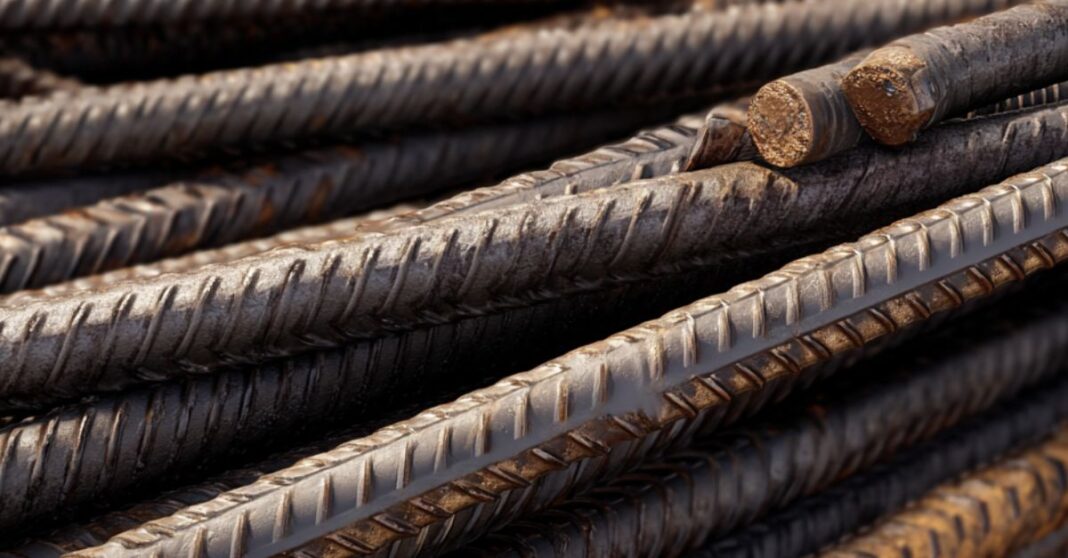

Allium Engineering, a materials science startup, has developed stainless steel–layered rebar designed to extend bridge lifespans from 30 to 100 years. The innovation applies a thin stainless coating to standard rebar, resisting corrosion without the high cost of full stainless construction. By replacing traditional epoxy-coated rebar, Allium aims to reduce bridge material costs while improving durability and long-term performance across infrastructure projects.
Bridge pilot deployments
The company’s stainless-clad rebar has already been used in bridge deck replacements on Interstate 91 in Massachusetts and U.S. Highway 101 in California, as well as in a commercial boatyard in Key West, Florida. Allium’s founders said their goal is to match or undercut epoxy-coated rebar pricing while reducing handling complexity and concrete use.
→ Explore more developments signaling industry disruption.
Production process
Allium’s manufacturing process fuses 7,000-pound billets of standard steel with stainless steel wire. The resulting billet, between six to eight inches thick, is rolled until it reaches the target size of 0.3 to 2 inches in diameter. This process forms a 0.2-millimeter stainless layer that, according to co-founder and CTO Samuel McAlpine, “is enough stainless steel to resist corrosion for hundreds or thousands of years.”
Cost efficiency
Traditional stainless rebar costs around five times more than uncoated steel. By contrast, Allium’s stainless-clad alternative could reach price parity with epoxy-coated rebar, which typically runs 25% to 50% higher than uncoated steel. The product also reduces indirect costs by eliminating the need for covered storage, coating repairs, and extra concrete layers that serve only to protect rebar from salt exposure.
Environmental potential
Eliminating redundant concrete could cut cement use by roughly 10%, reducing emissions associated with bridge construction. The lower corrosion risk also enables use of greener, less alkaline cement types. These factors position Allium’s technology as a sustainable alternative in an infrastructure market increasingly under pressure to meet both budget and climate goals.
Strategic significance
If Allium reaches cost parity with epoxy-coated rebar, the company could establish a new standard for mid-tier infrastructure projects that cannot justify full stainless steel costs. This shift could improve bridge longevity nationwide while lowering maintenance budgets. The approach demonstrates a commercial pathway for startups that merge industrial innovation with cost-aligned sustainability, signaling market opportunity in the intersection of materials science and public infrastructure investment.
Reference
De Chant, T. (2025, October 7). One startup’s paper-thin stainless steel could change how bridges are built. TechCrunch. https://techcrunch.com/2025/10/07/one-startups-paper-thin-stainless-steel-could-change-how-bridges-are-built/