
14.ai entered the market with a model that sat between software and outsourced services, making its value easy to overlook without clear positioning. This project focused on defining that hybrid model and translating it into a narrative founders, operations leaders, and support teams could quickly understand. The strategy centered on showing how AI managed workflows can reduce backlog, increase speed, and replace fragmented legacy support structures. Positioning emphasized measurable business outcomes through speed and operational efficiency, presenting 14.ai as a new service category with clear commercial relevance.
14.ai introduces a new model for AI customer service
by Harold Hare
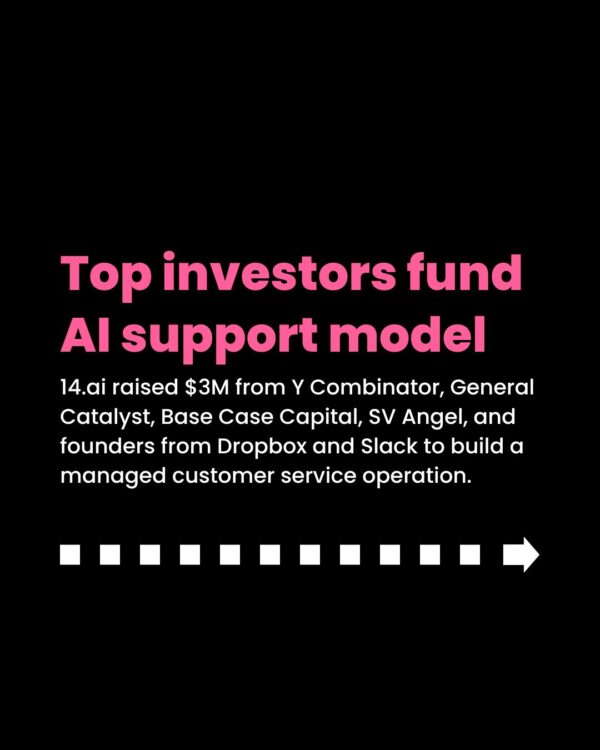
San Francisco startup 14.ai has entered the customer service market with a model that combines automation and operations into a single managed function. The company just emerged publicly with a $3 million seed round backed by Y Combinator, General Catalyst, Base Case Capital, SV Angel, and angel investors including founders from Dropbox, Slack, Replit, and Vercel. The new venture positions itself as an AI-native customer service agency designed to run support operations directly for clients rather than providing tools for them to operate internally.
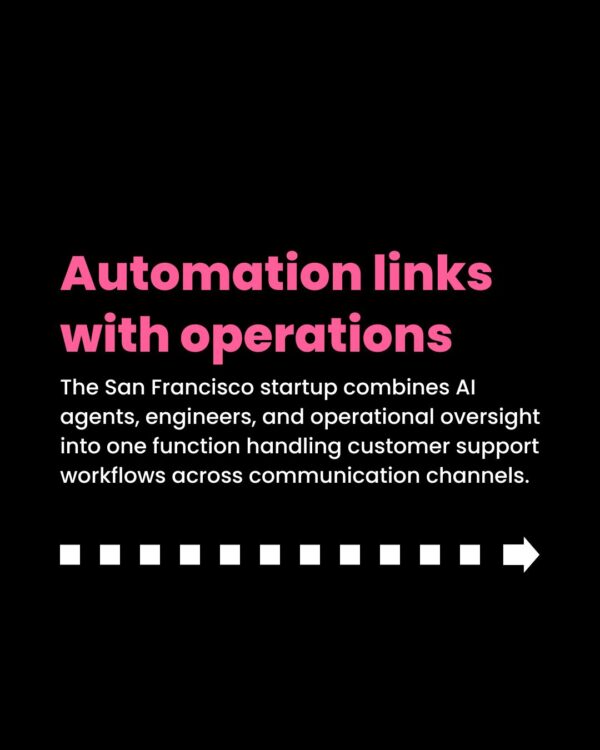
The startup was founded by married entrepreneurs Marie Schneegans and Michael Fester, both second-time founders with backgrounds in enterprise software and artificial intelligence. Instead of building a traditional software platform that companies configure and operate themselves, their company runs the entire support function using its own AI systems and engineers. The structure combines proprietary automation with human oversight inside a single team that manages the process end to end.
Engineers operating support systems
The company’s service structure differs from traditional customer service organizations that rely on large teams of agents or outsourced call centers. Rather than selling software subscriptions or staffing services separately, the company deploys its own engineers to operate a system of AI agents designed to manage customer interactions. These engineers configure automation, monitor conversations, and intervene when edge cases arise.
The platform stack integrates with existing company systems such as ticketing platforms, messaging tools, and social channels. Once connected, the AI platform monitors incoming support requests across channels including email, chat, voice, and messaging platforms. Automation handles most requests while engineers supervise outcomes and refine the system.
The arrangement effectively combines product development with service delivery. Engineers both maintain the software infrastructure and run the support workflow built on it. The people who build the automation are also responsible for ensuring the support function works in practice.
Early customer deployments
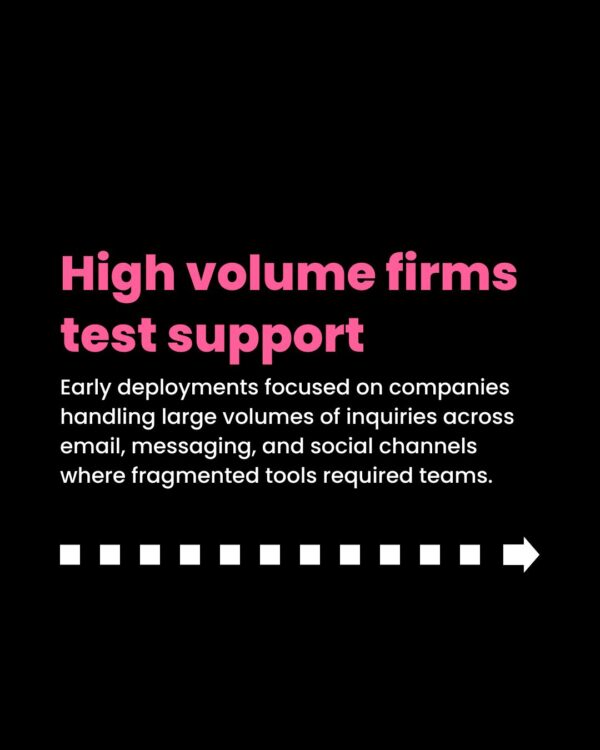
Early deployments have focused on companies managing high volumes of customer inquiries across multiple communication channels. TechCrunch reports that the company integrates into a customer’s support infrastructure quickly and begins processing the backlog of requests shortly after connection. The goal is to assume full ownership of the support function rather than gradually augment an existing team.
One early example involved a consumer brand experiencing a backlog of support requests across messaging platforms, email, and social media. After gaining system access, the engineering team began processing the queue through automated workflows supported by human oversight. The operation addressed messages across multiple channels simultaneously within a unified workflow.
These deployments show how the model handles fragmented customer communication environments. Many companies receive inquiries across multiple platforms that historically required separate support tools or teams. Centralizing those requests through a unified platform allows engineers to monitor the entire interaction stream within a single support layer.
Founders and company origins
The founders’ backgrounds include a combination of enterprise software development and artificial intelligence research. Marie Schneegans previously co-founded Workwell, a corporate intranet platform focused on workplace collaboration tools. Michael Fester co-founded Snips, a company that developed local-first voice assistants before being acquired by Sonos in 2019.
The founders met in Paris more than a decade ago before launching separate ventures. After their earlier companies matured, they relocated to the United States to build a company together. Customer service became the focus because of the complexity of managing support at scale and the large number of repetitive interactions handled by support teams.
Instead of creating another software vendor competing in the crowded customer service technology market, the founders pursued a service-first approach. The company functions as the support department itself instead of selling software that internal teams must manage.
Automation tested internally
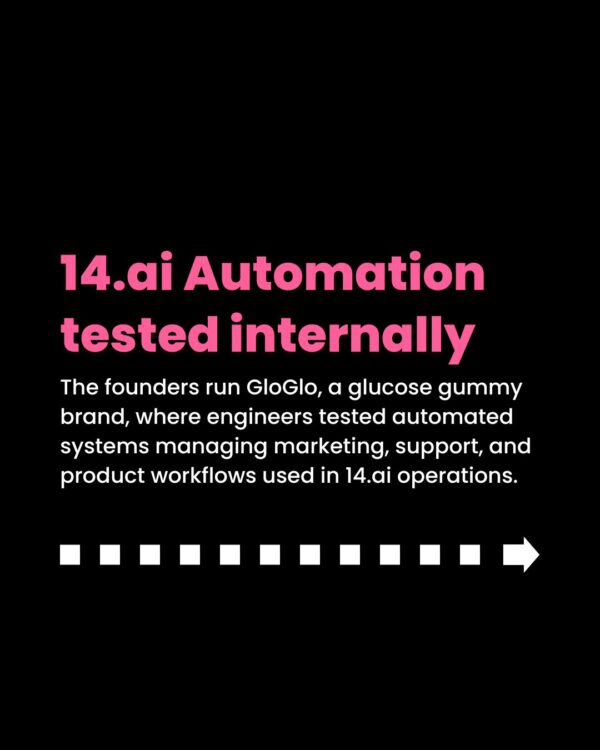
Beyond serving external clients, the company also experiments with automation through internal projects designed to operate with minimal human intervention. One example is GloGlo, a glucose gummy brand designed for people managing Type 1 diabetes. The project functions as a testing ground for automated operations across product development, marketing, and customer service.
The goal is to explore how far autonomous platforms can manage business operations when guided by engineers rather than traditional management structures. AI agents generate insights from customer interactions and operational data, allowing engineers to refine the automation over time.
These experiments place AI agents in real customer interactions, allowing the team to observe their behavior. The company uses these results to improve automation workflows that later appear in client deployments.
The emerging engineering role
Engineers are beginning to work differently with artificial intelligence tools. Software development cycles have accelerated as generative coding systems allow engineers to build features more quickly. As a result, the primary constraint in building products increasingly moves away from coding speed and toward product and systems decision-making.
Engineers working with AI systems often spend more time orchestrating automated workflows than writing code directly. They define system objectives, monitor behavior, and adjust the automation pipeline when outputs diverge from expectations. This role resembles a systems operator responsible for supervising intelligent infrastructure.
The company’s structure places this role at the center of business operations. Engineers oversee AI agents that handle customer communication, while human oversight remains available for complex cases. The result is a workflow where engineers supervise automated systems rather than managing large teams of agents.
Execution questions ahead
As the structure expands, maintaining consistent response quality becomes central to the customer experience. Customer service interactions often involve nuanced situations that require judgment, empathy, and contextual understanding. Automated systems handling these exchanges are continuously monitored and refined as engineers observe patterns in real interactions.
Customer support also serves as the primary interface between a company and its users. Messages arrive through email, messaging platforms, voice calls, and social channels throughout the day. Maintaining accuracy and responsiveness across those interactions remains essential as automated systems take on a larger share of the workload.
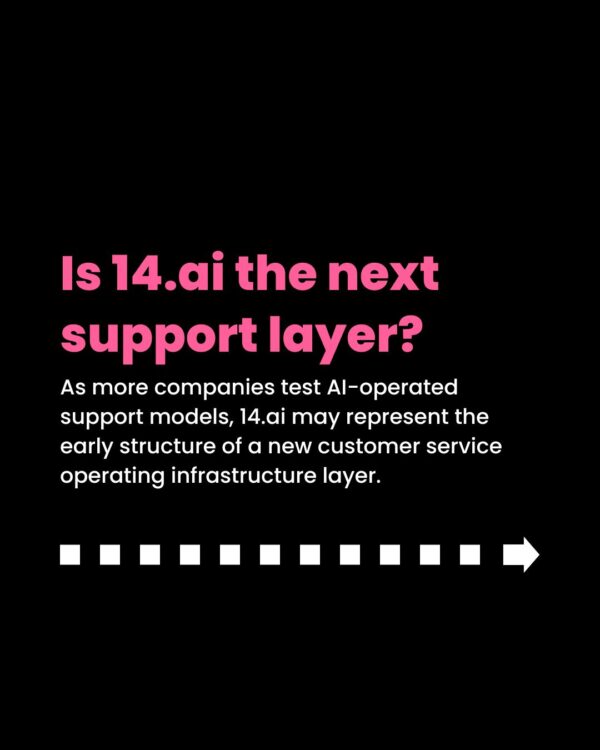
Adoption will expand as more companies explore outsourcing entire support functions to AI-driven platforms operated by specialized teams. Companies handling large volumes of customer inquiries are already experimenting with these structures. As adoption grows, engineering-led automation introduces a different way to manage customer relationships at scale.
Own the narrative early with content built to position your company and move attention in your direction.


